
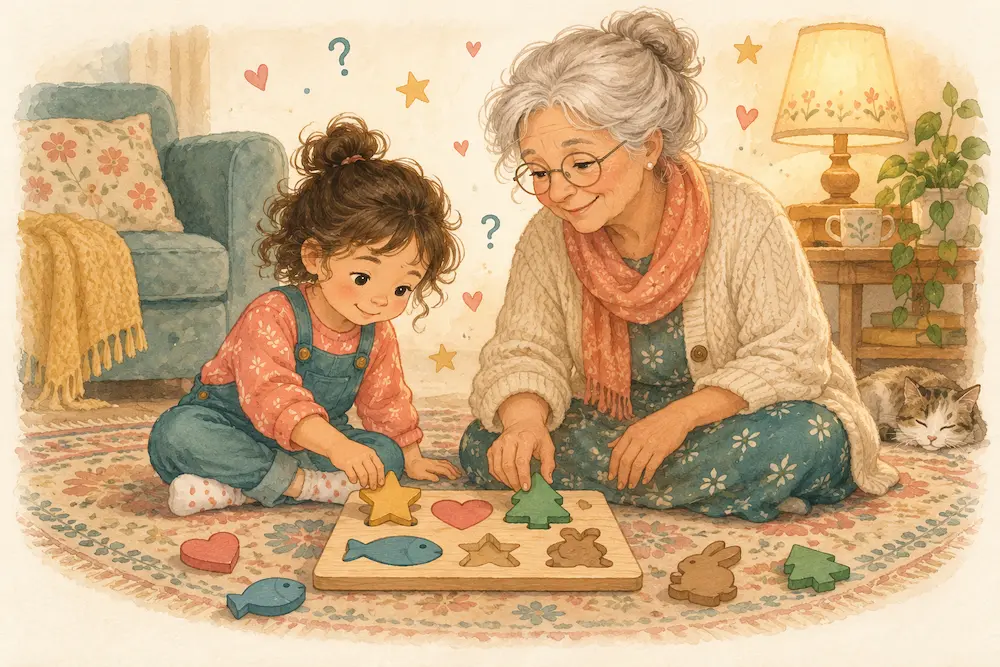
Maybe it started small. Grandpa called your son by the wrong name. Grandma asked the same question three times at dinner. Now your child is looking at you with big, worried eyes and asking, “Why does Grandpa keep forgetting?”
You may not be sure yourself what is normal and what is not. That is okay. This article will help you explain the difference to a young child in words they can understand, and give you simple things to say today.
What Is Happening, Explained Simply
Everyone forgets things sometimes. We lose our keys. We forget why we walked into a room. A child forgets where they left a shoe. Older adults can have these moments, too, and so can people of any age. Most of the time, this kind of forgetting is normal. It often happens when we are tired, busy, or have a lot on our minds.
Alzheimer’s disease is different. It is an illness of the brain, and it is the most common cause of dementia. Dementia is a word for changes in the brain that make it harder to remember, think, and do everyday things.
With Alzheimer’s, the changes get stronger over time. A person may forget important things, like the names of people they love, how to get home, or how to do jobs they have done for years.
Here is a simple way to think about it. Normal forgetting is like misplacing a toy that you find later. Alzheimer’s is like the brain slowly having a harder time holding on to the toy box itself.
Alzheimer’s is not caused by anything a child did or said. It is not catching, like a cold. A child cannot get it from being near a person who has it. Only a doctor can tell whether someone has Alzheimer’s, so if you are worried about a loved one’s memory, a medical visit is the right next step.
What Children Notice, Wonder, and Feel
Children often see more than adults expect. What they understand depends a lot on their age.
Ages 3 to 4. Very young children notice what is different, like a grandparent who seems confused or does not play the way they used to. They may not ask questions, but they may become clingy, fussy, or act younger. They need short, simple answers and lots of comfort.
Ages 5 to 6. Children this age start to ask “why” and “will it happen to me?” They may worry they caused the problem, especially if the grandparent seemed upset with them. They may also feel embarrassed or sad when a loved one does not remember their name.
Ages 7 to 8. Older children can understand that the brain is an organ that can get sick. They may ask how long it will last, whether it can be fixed, and what will happen next. They may feel angry, sad, or protective. Some will try to “help” in ways that feel like too much responsibility.
At every age, children feel what the adults around them feel. If you are tense, they will notice. You do not have to hide your sadness. You can be honest, calm, and kind all at once.
Sample Words You Can Say
Here are short scripts you can use word for word or change to fit your family.
For a young child (ages 3 to 5):
“Grandma’s brain is sick. It makes it hard for her to remember things. It is not your fault, and nobody did anything wrong. She still loves you very much, even when she forgets your name.”
For an older child (ages 6 to 8):
“Grandpa has an illness called Alzheimer’s disease. It changes how his brain works, so he forgets things and gets confused. It is different from the normal forgetting we all do, like losing our shoes. The doctors cannot make it go away, but we can still spend time with him and show him we care.”
When your child asks, “Why doesn’t Grandpa remember me?”
“His brain is not working the way it used to, so it cannot hold on to some memories. It does not mean he does not love you. Your hugs and your smile still make him feel good, even when he cannot find the right words.”
When your child asks, “Will I get it, too?”
“You do not catch Alzheimer’s from other people. It mostly happens to older people. You are healthy and growing, and your brain is working just fine.”
Scenario: Imagine a five-year-old named Mia who notices her grandfather’s hands shaking and that he often loses his words.
She whispers, “Is Grandpa mad at me?” Her mother kneels down and says, “No, sweetheart. Grandpa’s body and brain are changing, and sometimes it makes him mix up his words. He is not mad. He is happy when you sit with him.” Mia nods, climbs up beside him, and hands him her favorite stuffed rabbit.
What to Avoid Saying and Why
Some well-meant phrases can confuse or frighten a child. Here are a few to skip.
- “Grandma is just old and tired.” This hides the truth, and a child may start to fear getting old or feeling tired.
- “Grandpa is being silly.” A child may think the changes are a game or a choice, and may feel upset when the behavior does not stop.
- “She will get better soon.” If this illness does not get better, the child may feel confused or let down later. It is kinder to say that doctors can help with comfort and care, even if they cannot cure it.
- “Don’t tell Grandpa that he forgot.” Children need to know how to be kind without acting afraid. It is better to teach them gentle ways to respond.
- “Don’t worry about it.” Telling a child not to worry can make them feel their feelings are wrong. It is better to say, “It is okay to feel sad. I feel sad sometimes, too.”
Practical Ways to Help Your Child Cope and Stay Connected
You cannot take away the sadness, but you can give your child ways to feel close and useful.
- Keep visits short and simple. A calm hour is often better than a long, noisy afternoon.
- Choose shared activities. Looking at photos, coloring, listening to favorite songs, planting seeds, or walking outside are easy ways to connect without needing to remember anything.
- Teach a simple name routine. Your child can say, “Hi, Grandpa, it’s me, Ben!” This helps the older adult and gives the child something helpful to do.
- Explain that it is okay to correct gently, or not at all. If Grandma says something that is not quite right, your child does not have to argue. They can just smile and go along.
- Make a memory box. Put in photos, small objects, or drawings. Your child can look at it with you any time they miss the person, even on hard days.
- Give your child space to feel. Offer drawing, play, or quiet time. Let them know they can come to you with questions any time.
- Notice your own feelings. Taking care of yourself helps your child feel safe.
Scenario: Imagine a seven-year-old named Jamal whose grandmother lives with his family. She sometimes calls him by his father’s name. At first Jamal felt hurt. His dad explained that her brain mixes up names, and that it is not about Jamal.
Now Jamal says, “It’s Jamal, Grandma!” with a smile, and then shows her his latest drawing. They sit and color together, and the mix-up does not feel as big anymore.
Scenario: Imagine a four-year-old named Lily who lives with her single dad, and her great-aunt who visits on weekends. Lily noticed that her great-aunt asks the same questions again and again.
Her dad told her, “Her brain is tired in a special way, so she asks again. You can answer her just like the first time.” Lily now answers each time, and sometimes she turns it into a little song.
Frequently Asked Questions
Is it normal for older people to forget things?
Yes, some forgetting is common as people get older, such as misplacing keys or missing a name for a moment. Alzheimer’s involves bigger changes that get in the way of daily life. If you are concerned about someone’s memory, it is best to talk with a doctor.
Should I let my child see a grandparent with Alzheimer’s?
In most cases, yes. Children can handle more than we think, especially when an adult prepares them first. Short, calm visits with a trusted adult nearby usually work best. Trust your sense of how your child is doing.
What if my child is scared or does not want to visit?
That is a normal reaction. Let your child know their feelings are okay. You can try shorter visits, a video call, or sending a drawing instead. Go at your child’s pace.
What if my child asks if the person is going to die?
You can answer honestly and gently. For example: “Alzheimer’s is a serious illness, and over time it can make a person very sick. Many people live with it for years, and we can enjoy our time together now.” Families may also add their own beliefs and traditions here.
A Gentle Closing Thought
Helping a child understand Alzheimer’s is not about having perfect words. It is about being honest, kind, and present. Your child does not need to know everything at once. They need to know that they are safe, that the changes are not their fault, and that love still matters, even when memories fade. Small moments, like a shared song or a held hand, can mean a great deal to both of them.
If These Conversations Feel Very Hard
If talking about this feels overwhelming for you or your child, you are not alone. Speaking with a counselor or child therapist can help. They can offer support, answer questions, and help your family find ways to cope together.
This article offers general information and is not medical or professional advice. Please talk with your doctor or healthcare provider about any specific medical questions or concerns.